01Beginnings
Before 1780The beginning
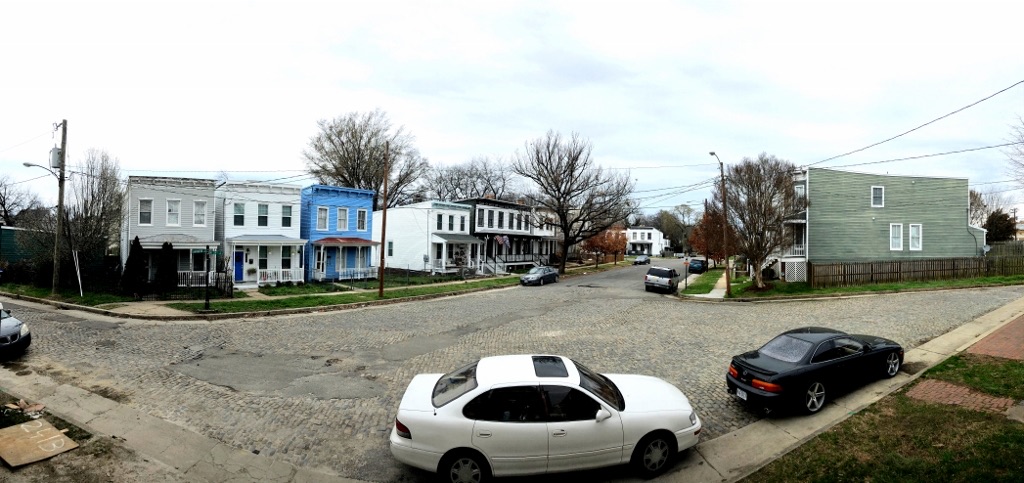
Carrington Street is laid with cobblestone and named later after Edward Carrington, witness in 1775 to Patrick Henry’s famous “Give me liberty, or give me death!” speech while standing outside a window at St. John’s Church. Edward Carrington was a Revolutionary War hero, and the first Marshal of Virginia. From various historical data and maps we know that Carrington Street extended from 25th Street in Church Hill to as far west as 17th Street in Shockoe Bottom.
1780
First Baptist Church of Richmond is formed at the corner of Pink and Carrington Street.
1890–1900
The bulk of the housing stock on the north side of Carrington is constructed.
1906
A portion of Henrico County is annexed by Richmond City, of which Carrington is a part. Carrington Street served as the old border between these two entities and now is the connecting border between the Union Hill neighborhood to the south and the Fairmount neighborhood to the north.
02Shortened and left behind
1976
With the construction of the Martin Luther King Bridge, Carrington Street is shortened to end at Mosby Street.
1960–1990
The neighborhood sees a period of redlining and disinvestment and begins to fall into disrepair.
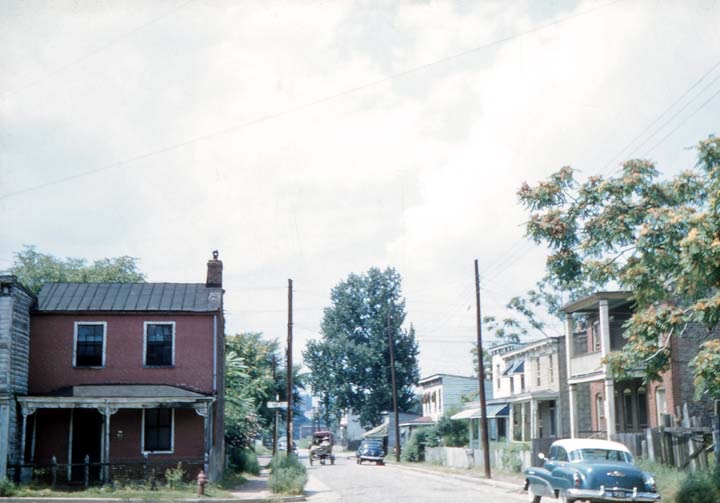
Carrington Street, 1980
03Plans, and continued neglect
1994
New Visions Civic League, Better Housing Coalition, and the VCU Department of Planning and Community Development work together to create a plan focused on reviving Carrington Street called Church Hill: A Vision for the Future. This plan is presented to Richmond City Council.
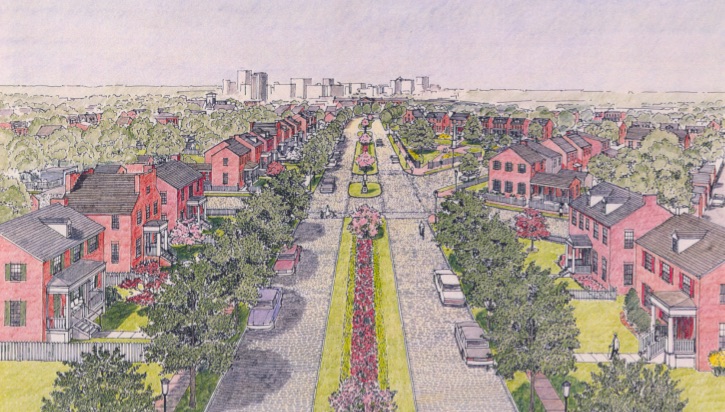
The 1994 proposal for Carrington Street 2007
The city adds sidewalks, trees, and a bench to the small triangle section of land they own at the intersection of Carrington, 23rd, and P Street.
2000–2015
With continued neglect, most of the buildings built along Carrington Street are beyond repair and demolished. The city increases the number of property auctions due to the large amount of foreclosures. Developers begin to purchase empty lots along the Carrington Corridor.
04The Coalition forms
2017
New Visions Civic League produces the Carrington Street Study and presents it to 7th District City Council Representative Cynthia Newbille and the Director of the Department of Public Works, highlighting both safety concerns and infrastructure opportunities to form an inclusive and vibrant corridor in advance of new housing projects on the street.
2018
The Carrington Corridor Coalition is formed by residents, organizations, and developers. Over 10 organizations and 100 individual residents express their desire for Carrington Street’s restoration to the City Council Vice President.
2020
New Visions Civic League, the Carrington Corridor Coalition, and the VCU Department of Urban Planning work together in creating an updated roadmap and plan for Carrington Street based on community feedback. City officials did not take up the offer to participate.
2021
City Council approves a special-use permit for a nine-unit mixed-use building at 2200 and 2202 Carrington Street, with three off-street parking spaces where nine are normally required (Ordinance 2021-295). New Visions Civic League opposes it: the parking waiver would add congestion and a safety hazard on a 24-foot two-way street, and the League could support the building only if Carrington were one-way. The city later makes Carrington one-way when the building goes up, but posts no one-way signs.
2018–2021
Approximately 70 new housing units are constructed within a half-block radius of Carrington Street. Between 50 and 100 new units potentially can be built in the next 5 years based upon current empty lot acreage, zoning, and the goals of Richmond 300.
05Paved over
2023
The city paves over the cobblestones of Carrington Street with asphalt. The work falls under the Department of Public Works’ resurfacing of the Fairmount area, which names Carrington Street as its southern boundary (Fiscal Year 2023 Paving Plan). Neighbors call their City Council members and stand in the street in front of the paving crews, and the cobblestone intersections are left in place.
2024
Reviewing the city’s gas-main replacement, the Virginia Department of Historic Resources notes that only portions of Carrington Street are still cobblestone, calls the pavers a character-defining feature of the Union Hill Historic District, and asks whether they will be removed and reinstalled (federal environmental finding, May 2024, page 7).
06Where things stand
Lines of communication with city representatives continue to be strained, as the city has not taken actionable steps to address the condition of the street.
The asphalt laid in 2023 was a stopgap, not a repair. The street is now in worse condition than before, and the city has no plans to restore the cobblestone intersections.
Evidence of street neglect is visible, with particular issues documented as early as 1972 and unaddressed at present.
With the continued neglect, there are two results:
- Safety risks increase.
- A missed opportunity to form a street infrastructure that curates and supports a lasting and vibrant neighborhood. Instead, the street is a detriment to the neighborhood, working against the published goals of the City of Richmond.